Published Data
High adherence to incretin-based therapy for obesity despite adverse events: Six-month results from the Roczen high engagement digital service in state-funded (NHS) patients.
Real-world adherence to incretin-based therapies for obesity typically lags behind clinical trials data, with typical attrition of 30–40% at six months.
Authors:
Thomas Curtis1, Laura Falvey1, Adrian Brown2, Jonathan Nguyen Van Tam3, Hywel Room4, Siri Steinmo5, Claudia Ashton1, Dipesh Patel6, Jonathan Kwan7, Barbara McGowan8
Affiliations:
1Reset Health Ltd, London, UK 2University College London, London, UK 3University of Nottingham School of Medicine, Nottingham, UK 4Colchester Hospital, East Suffolk and North Essex NHS Trust, UK 5UCLH, London, UK 6Royal Free Hospital, London, UK 7Darent Valley Hospital, Kent, UK 8Guys & St Thomas Hospital, London, UK
Background:
Real-world adherence to incretin-based therapies for obesity typically lags behind clinical trials data, with typical attrition of 30–40% at six months. Despite established efficacy, adverse events (AEs) are considered problematic and service models required to achieve retention in medically-complex patient groups are inadequately specified. We evaluated the impact of a high-engagement digital NHS service (Roczen) on retention, weight, AEs and clinical touchpoints.
Method:
A retrospective analysis was performed on 105 patients enrolled in the digital arm (Roczen) of a specialist obesity service in the NHS (SNEE ICB – ESNEFT Complex Obesity Service). Patients received ongoing clinical support and proactive medication management. Cumulative documented AEs and adherence (confirmed by real-time clinical contact) were assessed for 24 weeks. Patients were stratified into AE groups: low (0–2 events; n=22), medium (3–5 events; n=60) and high (≥6 events; n=23). 24-week retention and weight loss (168±28 days) were compared, overall, and by AE group. Weight-loss and dosing decision analysis was restricted to patients initiating incretin-based therapy with complete follow up data (n=90); retention and digital touchpoints were counted in the intention-to-treat population (n=105).
Results:
The cohort (79.0% female, age 54.4±12.8 years) was characterised by medical complexity (mean body mass index 47.0±10.3 kg/m²; mean comorbidities per patient 7.0±3.4). Treatment consisted of semaglutide (n=41; 39.1%), tirzepatide (n=38; 36.2%), or sequentially switched therapy (n=26; 24.8%). Two patients were excluded for planned surgery.
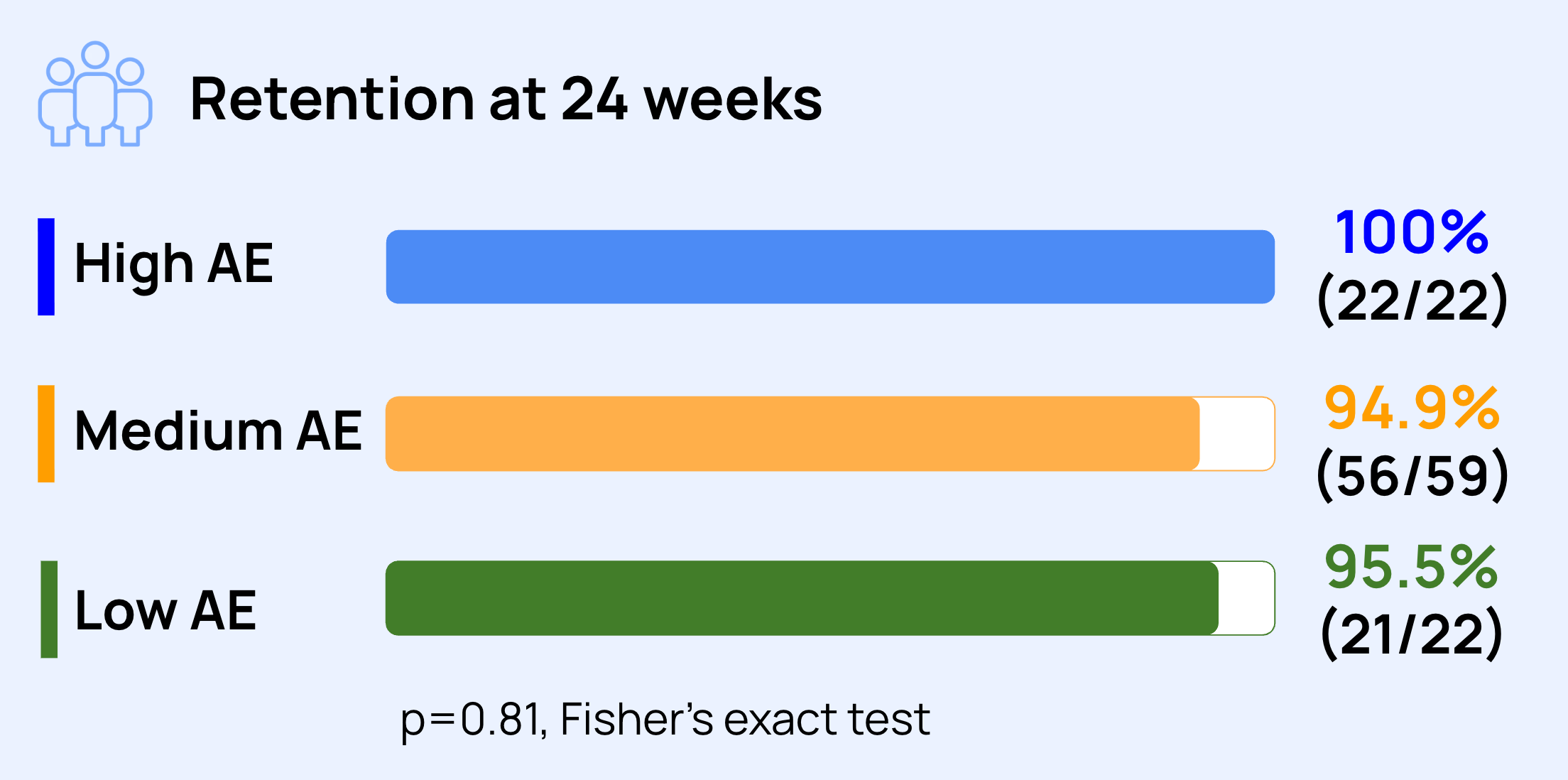
Overall, the service achieved 96.1% adherence and 10.3±5.3% mean weight loss at six months. Neither were affected by AE frequency. Patients in the high, medium and low AE groups achieved retention rates of 100% (22/22), 94.9% (56/59) and 95.5% (21/22) respectively (p=0.81, Fisher’s exact test [Monte Carlo]). The high AE group achieved a mean weight loss of 10.2±4.5% (n=21), the medium 10.0±5.4% (n=49) and low AE group 11.3±6.2% ([n=20]; p=0.66 [one-way ANOVA]).
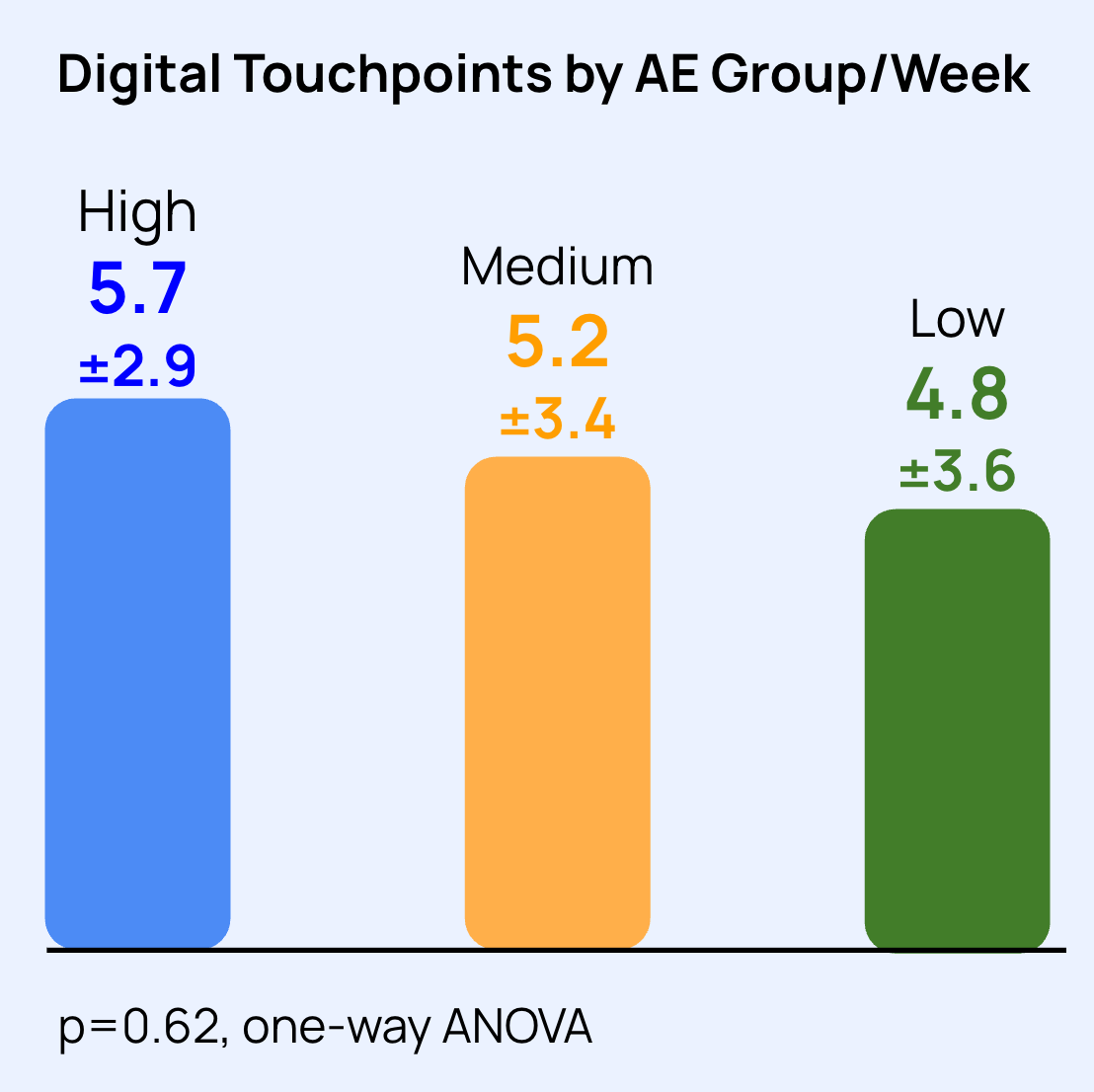
Of 612 dosing decisions, 31.1% were personalised deviations from standard escalation or maximal dosing. The mean level of digital touchpoints required in the high AE group was higher (5.7±2.9/week) than in medium or low groups (5.2±3.4, 4.8±3.6, respectively), but did not reach significance (p=0.62 [one-way ANOVA]).
Switching medication on clinical grounds (n=26, 25.2%) did not adversely affect retention (100%).
Conclusion:
In a medically-complex state-funded NHS cohort, Roczen was associated with strong adherence to incretin-based therapies across AE groups. We did not observe an expected relationship between AE frequency and attrition. We postulate that high attrition rates often observed in the real-world are not an inevitable consequence of the therapies themselves, but rather related to the level of clinical oversight and cost-based withdrawal. Roczen’s model provides sufficient support to help state-funded patients continue on medication for six months, and has the potential to increase long-term adherence.